
|
June 28, 2010 03:06:50
Posted By David Prashker
|
|
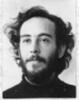
I started writing when I was 17, at school. Poems and short stories to begin with, then first attempts at novel-writing, both historical and contemporary, and a number of what I hope may be considered scholarly works along the way. 40 years and more than 25 books later I still haven't managed to convince myself that writing and publishing are in any way connected, probably because I've known a lot of published writers, not one of whom ever managed to publish the book they wrote - in every case, the books that bear their names are the result of a literary agent's rewriting to make it showable to a publisher, and then the editorial committee at the publisher's rewriting it again to make it filmable. So there's writing, and then there's publishing, and between the two there are all the layers of thought, imagination, craft and artistry that made the writing worthwhile in the first place. But then the age of the Internet came along, and suddenly it's possible to put your work out there for people to read or reject, exactly as you wrote it, standing or falling on its own merits. Starting in September 2013, and taking advantage of the fact that one no longer needs an agent or a publisher, I will begin publishing these books under the imprint of TheArgamanPress. Which book, on which date? Follow this blog, or go to TheArgamanPress.com, for information.
And why TheArgamanPress? The ancient Hebrews lived in Canaan, whose aboriginal inhabitants called it "Kinnahu", a word which means "purple", and is derived from the manufacture of a purple dye from the crushed shell of a sea-snail called the murex; with this dye Joseph's coat of many colours could be made, the priestly garment of the Hyksos "shepherd-kings", the scarlet of all priests and kings and tribal sheikhs for ever after. The neighbours of the Canaanites were the Phoenicians, who invented the alphabet that would become Greek, then Roman, finally English; but also Hebrew. They called their land "Phoinix", which also means "purple", and for the same reason. The Bible tells us that there were three shades of purple, the one derived directly from the juices of the murex, and two others, obtained by diluting the dye with milk or henna to soften it. The latter made red and blue, the former remained purple, and in Hebrew the word for "purple" is "Argaman". Writing "The Flaming Sword" in the early 1980s, I needed a codename for Bernhard Aaronsohn when he joined the French Maquis, and later the Black Underground in Poland. Imagery throughout the book had played with the colour purple, from the lilac trees in his parents' garden which were my way of taking Eliot's poem "The Wasteland" as a source text for the whole book, to the colour of iodine, which can paint bruises back into healing. So Bernhard Aaronsohn became "Argaman", and the quintet found its name as well. So, now, the means of publishing it.
|
|
|
Home |
DavidPrashkersAlamanac |
Terms & Conditions |
Administrator Sign In
|
RSS 
All blog contents are provided by website administrator. All other trademarks and copyrights are the property of their respective holders.
Copyright © 2026. Doteasy Technology Inc. All Rights Reserved. Blog software owned and powered by Doteasy Web Hosting.
All blog contents are provided by website administrator. All other trademarks and copyrights are the property of their respective holders.
Copyright © 2026. Doteasy Technology Inc. All Rights Reserved. Blog software owned and powered by Doteasy Web Hosting.